domingo, 24 de diciembre de 2017

10 Common Time Management Mistakes that are Slowing You Down

 by @openviewventure 10 Common Time Management Mistakes that are Slowing You Down


1. Failing to prioritize

… Learning how to prioritize is a process and you’ll need time and experience to find out the most efficient technique, that is, the one that works best for you. …

2. Starting your day late

… Starting your day late triggers a domino-effect. …

3. Ineffectively scheduling tasks

… The easiest way to balance your time is to find out what your peak time is and allocate that time for doing top-priority work …

4. Procrastinating

… try breaking the task into manageable pieces. …

5. Failing to manage numerous distractions

… Whether it’s the phone that keeps ringing or notifications that you keep getting from either chat or social media groups, they interrupt our workflow and break our creative process. …

6. Undervaluing the time something will take to finish

… writing down the amount of time you will need to complete each one of your tasks on your to-do list. She also recommends, doubling the time …

7.  Multitasking

… doing many things at the same time prevents you from focusing on all of your tasks equally and takes much more of your time than completing your tasks in a sequence. … multitasking isn’t for everyone so choose your battles carefully. …

8. Being busy vs being effective

… you must constantly ask yourself:
  • Is this useful?
  • How does this contribute to the ultimate goal? 
… instead of doing one task each day, do the three days of minor tasks in one afternoon. …

9. Being a perfectionist

… you should strive towards getting the best performance, you need to keep in mind that you don’t have the luxury to complete every task to perfection. … This goes back to prioritization. …

10. Skipping on breaks

… No matter whether you are working on urgent tasks or completing some minor errands, setting some time aside to have a break is simply an imperative. …

martes, 12 de diciembre de 2017

is the world coming to an end?

I quote one of the last Peter Diamandis' newsletters… as it sets up the right mindset (in my opinion) to "front facing" the future.
We’re living in a period of rapid change, and over the next 5 years, we’re going to see significant disruptive advancements that will reshape the world as we know it. 
So many people fear change, and because they don’t understand where technology is leading us, they have very gloomy views of what the future holds. 
If you listened to many media pundits, they’d have you believe that the world is coming to an end. 
The data shows others. 
The facts, however show that the world is getting better at an extraordinary rate. 
I truly believe that this is the most exciting time ever to be alive. 
As an entrepreneur, you have access to the world's information on Google. You can go onto Amazon Web Services and have access to more computational power at your fingertips than the Joint Chiefs of Staff had just 20 years ago. And on top of all that, there’s more capital available to entrepreneurs than ever before. 
Then there’s the major advancements in longevity. 
The cost of things like genome sequencing and stem cell treatments are dropping every year. 
These treatments have massive potential to extend the healthy human lifespan and cure disease...  And it won’t be long until these treatments become affordable to the average person. 
That’s just scratching the surface of some of the major advances that will shape our future. 
And yes. I won’t deny it. Some of the coming disruptive advances in technology are going to create problems in the short term. 
For example, there is no doubt in my mind that artificial intelligence will displace millions of jobs over the coming years, with the potential to create mass technological unemployment. That will be a big problem. 
However, it’s also true that the world’s biggest problems are the world’s biggest business opportunities. 
And as an entrepreneur, you can use these emerging technologies to help solve these problems — and create wealth for yourself — while also making a positive impact on the world. 
But to put yourself in a position to solve these coming problems, you must be able to see them before they happen. 
Leaders anticipate. Followers react. 
Fortunately, you don’t need a crystal ball to see these problems coming. 
There’s a science to accurately predicting what’s coming over the horizon. 
My goal is to show people where the future is going. To show people what technologies are going from deceptive to disruptive. 
And perhaps most importantly of all… To show you how you can take advantage of these coming changes, and massively impact the world, so you are excited about the future, rather than fearful of it. 
Having the right mindset is essential in preparing yourself for these new opportunities. And something I call a “Massively Transformative Purpose,” or MTP. 
I’ve put together free training to teach you exactly what an MTP is, how you can discover your own, and how this knowledge affects everything else you will do for the rest of your life. 
Watch the training video here:
http://getabundance.digital/mtp   
 
If you can anticipate what’s coming, you have a tremendous advantage in life. You don’t want to miss this. 
Best, 
Peter 

Happy Holiday 2017

MIT Holiday 2017


domingo, 10 de diciembre de 2017

The Future 100: Trends & Change to Watch in 2018

The Innovation Group presents our snapshot of the year ahead and the most compelling trends to keep on the radar: The Future 100: Trends and Change to Watch in 2018


The Future 100: 2018 - JWT Intelligence


Today, trends scale rapidly through technological change and digital networks. New models of commerce are causing disruption, while technology like augmented reality and 5G are transforming the internet. In food, drink and beauty, nascent trends explode in a nanosecond, thanks to social media. And marketers are navigating a sophisticated landscape where they are assessed on the nuances of their visual language and representation. 


The Future 100 charts 10 emerging trends across 10 sectors, spanning marketing, culture, travel and more. Highlights include: 
Culture: Intersectionality. “Intersectionality” is resurging in popular discourse—both in media outlets trying to reach the highly diverse generation Z, and among diversity chiefs developing employment practices. 
Tech & Innovation: Manufacturing 2.0. From Adidas’s new Speedfactory to Puma, brands are reshaping the factory with advanced rapid-manufacture techniques, creating bespoke products on demand.
Travel & Hospitality: Immersive hospitality. Spooked by stagnant audience figures, film companies are creating immersive hotels in their films’ worlds, like Disney’s Star Wars hotel, launching in 2019.  
Brands & Marketing: Branded audio. First came branded content, then videos. Next, branded audio offers intimate opportunities for brands to connect with audiences in the era of voice. 
Food & Drink: Algorithmic food design. Having revolutionized art and sculpture, algorithms are making inroads in food design, creating unique and Instagram-optimized shapes.
Beauty: New wave men’s grooming. Men’s skincare was one of the year’s most-searched beauty trends. New retailers and design objects reflect a sophisticated clientele moving beyond stereotypes. 
Retail: Hyper-personalized products. The trend towards diagnostic, highly-personalized services is spreading from health to retail, as consumers become comfortable with exchanging personal data for solutions. 
Health: Trippy wellbeing. The latest trend among high performers seeking shortcuts to optimized wellbeing is psychedelic drugs, which are enjoying a popularity not seen since the 1960s.
Luxury: Remote on demand. Services like Blink by Black Tomato offer pop-up travel in remote locations that take personalization to the extreme, as wealthy travelers eschew cookie-cutter experiences.
Lifestyle: Gen Z yellow? New zeitgeist hues for 2018. Like its namesake, Gen Z Yellow is optimistic and gender-neutral. 2018’s new shades will make a colorful impact on our everyday landscape.

viernes, 8 de diciembre de 2017

Should You Bet on What The Wealthy Do Today?

by @WillyBraun along and thoughtful post on where to look in search of innovation.

Should You Bet on What The Wealthy Do Today? – chronicles – Medium

If you look at what the wealthy do… “scale economies and online efficiencies will combine to keep driving prices down within this business model, and entrepreneurs will soon realise that the middle class is a huge market, and so tailor offerings toward it.”

Thus, Hal Varian concluded “a simple way to forecast the future is to look at what rich people have today; middle-income people will have something equivalent in 10 years, and poor people will have it in an additional decade. Think of VCRs, flat-screen TVs, mobile phones, and the like. Today, rich people have chauffeurs. In 10 years or less, middle-income drivers will be able to afford robotic cars that drive themselves, at least in some circumstances”.

The belief in the Varian Rule has certainly driven many VCs to bet heavily on the “on-demand economy”, which tried to replicate the convenience of services dedicated to the ultra wealthy for mainstream consumers.

BUT


The decreased transaction costs, increased convenience and decreased barriers to entry, might increase the market and change the habits of the upper middle class in the megalopolis, but it would be very surprising -all things being equal- if these habits would become international mainstream. It is just too expensive since a large percentage of the costs are not compressible.


I think we should make at least three observations about these discoveries:

  • The Varian Rule seems eventually quite compelling in the light of these generalizations (earlier adopters have a higher social status, and overall, more wealth).
  • These relationship are mere correlations. No causality can be concluded on the basis of available cross-sectional data. In other other words: we cannot know whether earlier adopters innovate because they are richer or if they are richer because they innovate (mostly thanks to an increase of productivity).
  • If you assume that earlier adopters become richer because they innovate (and point 6 could be an indicator of that), the Varian Rule could be (at least partially) invalidated: innovations could not go from the wealthy to the non-wealthy but from the soon-to-be wealthy to the already wealthy (and then to the non-wealthy).


But if we say that the Varian Rule covers only a subsegment of the segment of early adopters, who are the other people to observe?
Opinion Leadership, Diffusion Networks, Weak Ties & Change Agents


If we try to summarize all of this and develop our understanding of diffusion of innovation, we shall say that: opinion leaders are super effective in bringing behavior change and diffusing innovations. They can be rich. But they not always are. They are the people to observe closely.


CONCLUSION
  • Research traditions indicate that the main challenge for a given innovation to become mainstream, is to cross the chasm from the early adopters to the early majority. When the chasm is crossed, you reach a critical mass (tipping point).
  • -Research suggests that, overall, innovators and early adopters are wealthy, so it can be a good idea to just observe what the wealthy do to predict future usages.
  • -Yet, innovations and early adopters might only become wealthy by their use of innovations (increased productivity & economic attraction), which has been the case for many innovations brought to the market “by the street”. So solely focusing on the wealthy would NOT allow to fully predict future usages (it would be only partial).
  • -Observing the wealthy, as suggested by the Varian Rule, is especially a good idea when the products and services can become significantly cheaper through technology, at a fast pace (which would explain why VCs focus on scalability and on products and services where marginal costs can be very low).
  • -To make sure not to miss an innovation, we should observe opinion leaders (and many rich people are, so it’s not a pure contradiction of the Varian Rule), the more cosmopolite and mobile they are, the better bridge links they will be. These people are often at the crossroad of many social, economic and cultural systems and often a good way to predict the future.
  • If you apply this topic for VCs, two big questions remain:
  • 1. Should VCs only focus on innovations when they already reach the opinion leaders, or should they also fund products and services before they do (R&D stage or before launch)? Market practices suggest that institutional investors focus on the former (excepting seed & pre-series A investments), especially because the expected value of these investments are higher (higher probability of success).

  • 2. If VCs focus on the innovations that already reached opinion leaders (and started to have some tractions), the other big question is: how to determine which innovations you should bet on? If there is a chasm between the early adopters and the early majority, it’s because many innovations talked about by opinions leaders will never work… But that’s for another post.


La economía de las 2 “Cs”

 por @aalbaperez (Angel Alba) en Sintetia • Nuevos negocios a la vista: la economía de las 2 “Cs”

La economía circular

Según la fundación Ellen McArthur, la economía circular restaura y regenera por diseño. Confía en la innovación de todo el sistema, su objetivo es redefinir los productos y servicios para eliminar los residuos, y al mismo tiempo minimizar los impactos negativos. Impulsado por una transición a fuentes de energía renovables, el modelo circular construye capital económico, natural y social.

Porque desde mi punto de vista la economía circular responde a una sensibilidad social del consumidor responsable. Un consumidor que:

.. Exige transparencia a las empresas. Ya no todo vale, las empresas tienen que ser auténticas.

.. Pide un uso más sostenible de los recursos. Si yo me preocupo por reciclar y ahorrar energía, ¿por qué las empresas no?

.. Se preocupa por el medioambiente (aunque sea más con palabras que con hechos, como hemos visto más arriba)

.. Y le preocupa la alimentación. Es la punta de lanza de los productos ecológicos.


La economía colaborativa

El consumidor responsable, alimentado por el mayor poder que le otorga el acceso a información en internet y redes sociales, no confía en los modelos que le ofrecen las empresas con sus producciones sostenibles.

Entonces se da cuenta de que tiene recursos ociosos, con los que puede sacar un beneficio, bien económico, o bien por el intercambio de bienes y servicios. Porque ése es el origen de la economía colaborativa: aprovechar los recursos ociosos con los que se cuenta. Surge el ciudadano productor, que intercambia bienes y servicios con otros.

Ante esta oportunidad y utilizando la accesibilidad de la tecnología, surgen nuevos y disruptivos modelos de negocio, basados en la interconexión de particulares. Según un estudio de Pricewaterhouse, se prevé multiplicar por 20 el valor económico del sector en los próximos 10 años, con crecimientos del 35% anual, liderados por tres sectores:
.. Transporte (Cabify, Uber, Glovo…)
.. On demand house (servicios a domicilio, especialmente para freelance)
.. Finanzas (¿nos hemos cansado de los bancos?)

Una oportunidad demasiado jugosa para no participar. Quizás por eso, la mitad de los proyectos de emprendimiento (incluso de empresas ya consolidadas) que me llegan tienen que ver con plataformas de economía colaborativa. …


Tanto la economía circular como la economía colaborativa suponen un campo abonado para la explotación de nuevos modelos de negocio innovadores. 


miércoles, 22 de noviembre de 2017

Growth Hacking Your Job Search

5 Steps to Get Hired by the Company You Want - Zapier

Step 1: Identify Your Prospects—Target Your Dream Companies
Step 2: Create the Pitch: What Do I Have to Offer?
Step 3: Run an Outbound Sales Process
Step 4: Don’t give up
Step 0: Be really good at what you do. None of this matters if you can’t pass the skills tests

domingo, 12 de noviembre de 2017

¿Qué trampas engañan a tu mente como inversor?

 ¡Conócelas y conseguirás tus metas financieras! Trampas para tu mente • Mediolanum


  1. El sesgo de confirmaciónmediante el cual el inversor tiende a obviar toda aquella información que no apoye sus creencias…
  2. El sesgo del hogar. Los inversores tienen una tendencia natural a invertir en aquellas acciones con un componente nacional
  3. El sesgo de manada o tendencia es uno de los más potentes en el campo de la inversión. Muchos inversores no analizan la calidad de la inversión, sino que se dejan influir por las acciones colectivas de su entorno más cercano.
  4. El sesgo de preocupación evoca una serie de recuerdos vívidos en el corto plazo y crea en la mente visiones de posibles escenarios que pueden alterar el juicio del inversor acerca de sus finanzas.
  5. El sesgo del efecto disposición es de los más perjudiciales, porque limita las inversiones ganadoras y deja correr las inversiones perdedoras.
  6. El sesgo de autoatribución. … muchos inversores tienden a atribuirse los resultados positivos de su cartera, mientras que los negativos se deben a factores externos.

The Web began dying in 2014, here's how

 by André Staltz - The Web began dying in 2014, here's how

The Web and the internet have represented freedom: efficient and unsupervised exchange of information between people of all nations. In the Trinet, we will have even more vivid exchange of information between people, but we will sacrifice freedom. Many of us will wake up to the tragedy of this tradeoff only once it is reality.
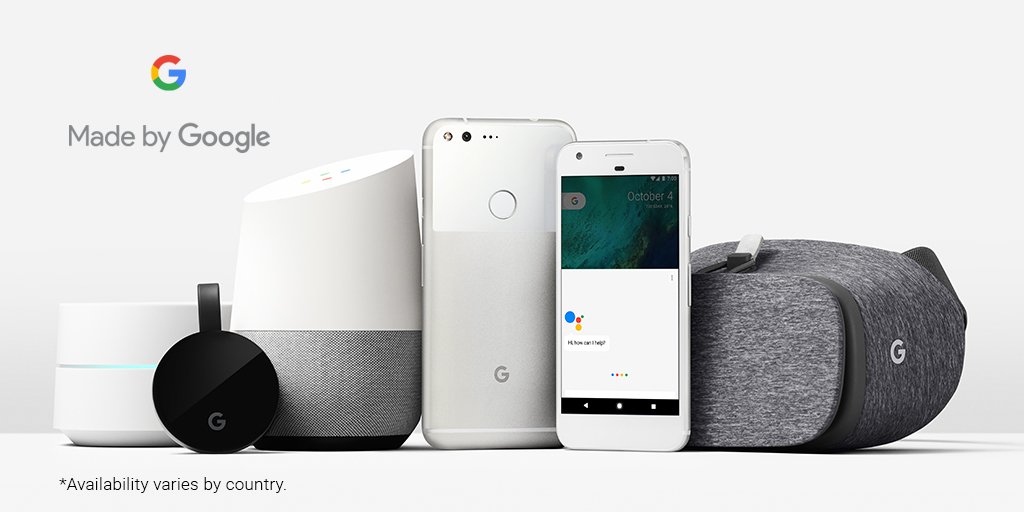
GOOG devices


The Appleification of tech giants

GOOG, MSFT, FB, and AMZN are mimicking AAPL’s strategy of building brand loyalty around high-end devices. Through a process I call “Appleification”, they are (1) setting up walled gardens, (2) becoming hardware companies, and (3) marketing the design while designing for the market. It is a threat to AAPL itself, because they are behind the other giants when it comes to big data collection and its uses. While AAPL’s early and bold introduction of an App Store shook the Web as the dominant software distribution platform, it wasn’t enough to replace it. The next wave of walled gardens might look different: less noticeable, but nonetheless disruptive to the Web.
There is a tendency at GOOG-FB-AMZN to bypass the Web which is motivated by user experience and efficient communication, not by an agenda to avoid browsers. In the knowledge internet and the commerce internet, being efficient to provide what users want is the goal. In the social internet, the goal is to provide an efficient channel for communication between people. This explains FB’s 10-year strategy with Augmented Reality (AR) and Virtual Reality (VR) as the next medium for social interactions through the internet. This strategy would also bypass the Web, proving how more natural social AR would be than social real-time texting in browsers. Already today, most people on the internet communicate with other people via a mobile app, not via a browser.
The common pattern among these three internet giants is to grow beyond browsers, creating new virtual contexts where data is created and shared. The Web may die like most other technologies do: simply by becoming less attractive than newer technologies. And like most obsolete technologies, they don’t suddenly disappear, neither do they disappear completely. You can still buy a Walkman and listen to a tape with it, but the technology has nevertheless lost its collective relevance. The Web’s death will come as a gradual decay of its necessity, not as a dramatic loss.

domingo, 5 de noviembre de 2017

Cómo evolucionará la Inteligencia Artificial en 2018

 vía @KicoArjona Gartner acaba de publicar las diez tendencias tecnológicas más relevantes para 2018
Cómo evolucionará la Inteligencia Artificial en 2018

Basta considerar que uno sólo de los cientos de miles de ordenadores que Google tiene en la red consta de 96 núcleos y dispone de 624Gb de memoria 
En unos pocos años no se comprenderá crear una App o desarrollar un dispositivo que no sea capaz de reconocer a su usuario (bien por la voz o por su rostro), que sea incapaz de comprender qué le está preguntando o que no pueda responderlo en cualquier idioma. En realidad, hoy en día es ya posible desarrollar este tipo de interfaces a nuestras aplicaciones con un esfuerzo mínimo utilizando los servicios cognitivos de cualquier de las empresas antes mencionadas.